

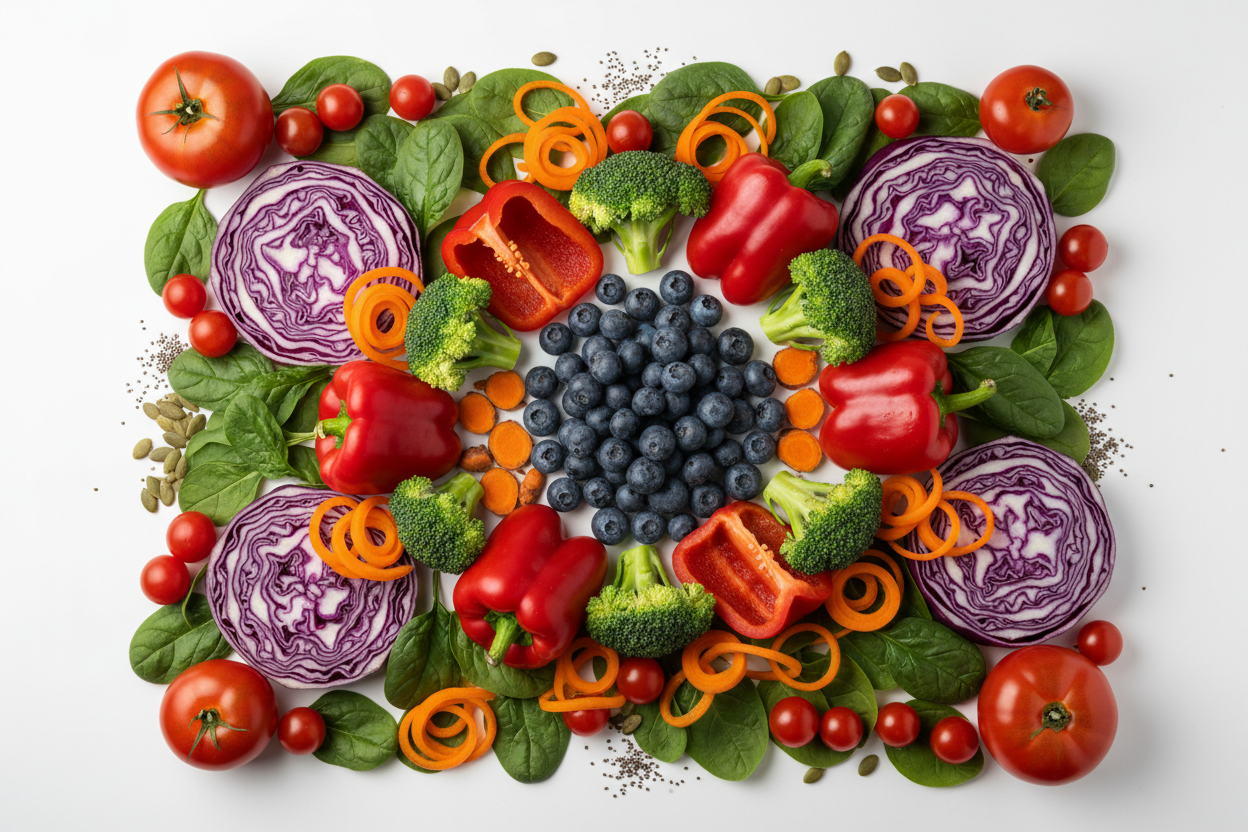
Multivitamin complexes are food supplements formulated to provide essential vitamins and minerals to the body. They can be a practical way to supplement one's diet when it doesn't provide adequate amounts of certain micronutrients.
What is a multivitamin complex?
A multivitamin complex is a food supplement that typically contains most essential vitamins and, in many cases, minerals, in amounts close to 100% of the Nutrient Reference Values (NRVs) for adults.
Its purpose is to supplement the diet and help ensure an adequate intake of micronutrients necessary for the normal functioning of the body.
What is the prevalence of micronutrient deficiency in the population?
Vitamin and mineral deficiency continues to be a public health problem in many countries.
In the United States of America, data from the National Health and Nutrition Examination Survey (NHANES) show that a large part of the population has intakes below the recommendations for several essential micronutrients.
In Europe, although the situation varies between countries, studies also suggest that certain population groups have insufficient intakes of some vitamins and minerals, namely vitamin D, folate, iron, and magnesium.
What are the health problems associated with micronutrient deficiency?
Micronutrients play essential roles in the body.
Insufficient intake can contribute to the appearance of various health changes and increase the risk of developing certain diseases throughout life.
Micronutrient deficiencies have been associated with:
- fatigue and tiredness;
- decreased normal functioning of the immune system;
- changes in cognitive function;
- changes in psychological well-being;
- reduced bone health;
- increased risk of some chronic diseases.
Which groups of people are at higher risk of micronutrient deficiency?
Although not an exhaustive list, the following may be at higher risk:
- people with an unbalanced and unvaried diet;
- people with obesity associated with a diet rich in calories but poor in micronutrients;
- people on very restrictive or hypocaloric diets;
- people with low purchasing power and limited access to nutritious food;
- the elderly;
- individuals with diseases affecting intestinal absorption;
- people with increased nutritional needs.
Who might benefit from a multivitamin complex?
When the diet does not provide adequate amounts of vitamins and minerals, a multivitamin complex can be a simple way to supplement micronutrient intake.
Supplementation should be considered a complement to a varied and balanced diet and not a substitute for healthy eating habits.
Multivitamin complexes continue to be among the most widely used food supplements worldwide.
What is the benefit of adding ginger to a multivitamin complex?
Some multivitamin complexes include ginger (Zingiber officinale) for its bioactive compounds, namely gingerol and shogaol.
Scientific research has studied ginger for its potential role in various areas of health, including:
- support for the body's antioxidant response;
- reduction of nausea and vomiting;
- digestive health;
- glucose metabolism;
- cardiovascular health;
- cognitive function;
- the body's response to certain microorganisms.
While the results are promising, many of these effects are still under investigation, and currently there are no authorised health claims for ginger by the EFSA.
What are the possible adverse effects of excessive multivitamin consumption?
Generally, multivitamin complexes are considered safe when used according to recommended doses.
However, excessive intake of certain vitamins and minerals may increase the risk of adverse effects.
Quality formulations are usually developed to provide amounts close to the Nutrient Reference Values (NRVs), remaining below the Tolerable Upper Intake Levels (ULs) defined for each micronutrient.
For this reason, it is recommended not to exceed the daily dose recommended by the manufacturer or health professional.
Conclusion
Multivitamin complexes are a practical way to supplement one's diet when it does not provide adequate amounts of vitamins and minerals.
While not a substitute for a varied and balanced diet, they can help address nutritional deficiencies in certain population groups.
Like any food supplement, they should be used responsibly and according to the recommendations of a health professional.
The information presented in this article is for informational purposes only and does not substitute medical advice. Food supplements should not be used as substitutes for a varied and balanced diet and a healthy lifestyle.
References
Ames, B.N., 2006. Low micronutrient intake may accelerate the degenerative diseases of aging. Proceedings of the National Academy of Sciences, 103(47), pp.17589–17594.
Bailey, R.L., Gahche, J.J., Miller, P.E., Thomas, P.R. & Dwyer, J.T., 2013. Why US adults use dietary supplements. JAMA Internal Medicine, 173(5), pp.355–361.
Bailey, R.L. et al., 2011. Estimation of total usual calcium and vitamin D intakes in the United States. Journal of Nutrition, 141(4), pp.817–822.
Bird, J.K. et al., 2017. Risk of deficiency in multiple concurrent micronutrients in children and adults in the United States. Nutrients, 9(7), 655.
EFSA Panel on Nutrition, Novel Foods and Food Allergens. Scientific Opinions on Dietary Reference Values.
EFSA Register of Nutrition and Health Claims.
Fortmann, S.P. et al., 2013. Vitamin and mineral supplements in the primary prevention of cardiovascular disease and cancer. Annals of Internal Medicine, 159(12), pp.824–834.
Institute of Medicine (US), 2006. Dietary Reference Intakes: The Essential Guide to Nutrient Requirements. Washington, DC: National Academies Press.
Mashhadi, N.S. et al., 2013. Anti-oxidative and anti-inflammatory effects of ginger. International Journal of Preventive Medicine, 4(Suppl 1), pp.S36–S42.
Mao, Q.Q. et al., 2019. Bioactive compounds and pharmacological activities of ginger. Food Science and Human Wellness.
National Institutes of Health. Office of Dietary Supplements. Multivitamin/Mineral Supplements Fact Sheet.
Roman Viñas, B. et al., 2011. Project EURRECA: prevalence of inadequate nutrient intakes in Europe. British Journal of Nutrition, 106(S2), pp.S9–S23.
Semwal, R.B. et al., 2015. Gingerols and shogaols: Important nutraceutical principles from ginger. Phytochemistry.

Leave a comment
This site is protected by hCaptcha and the hCaptcha Privacy Policy and Terms of Service apply.