
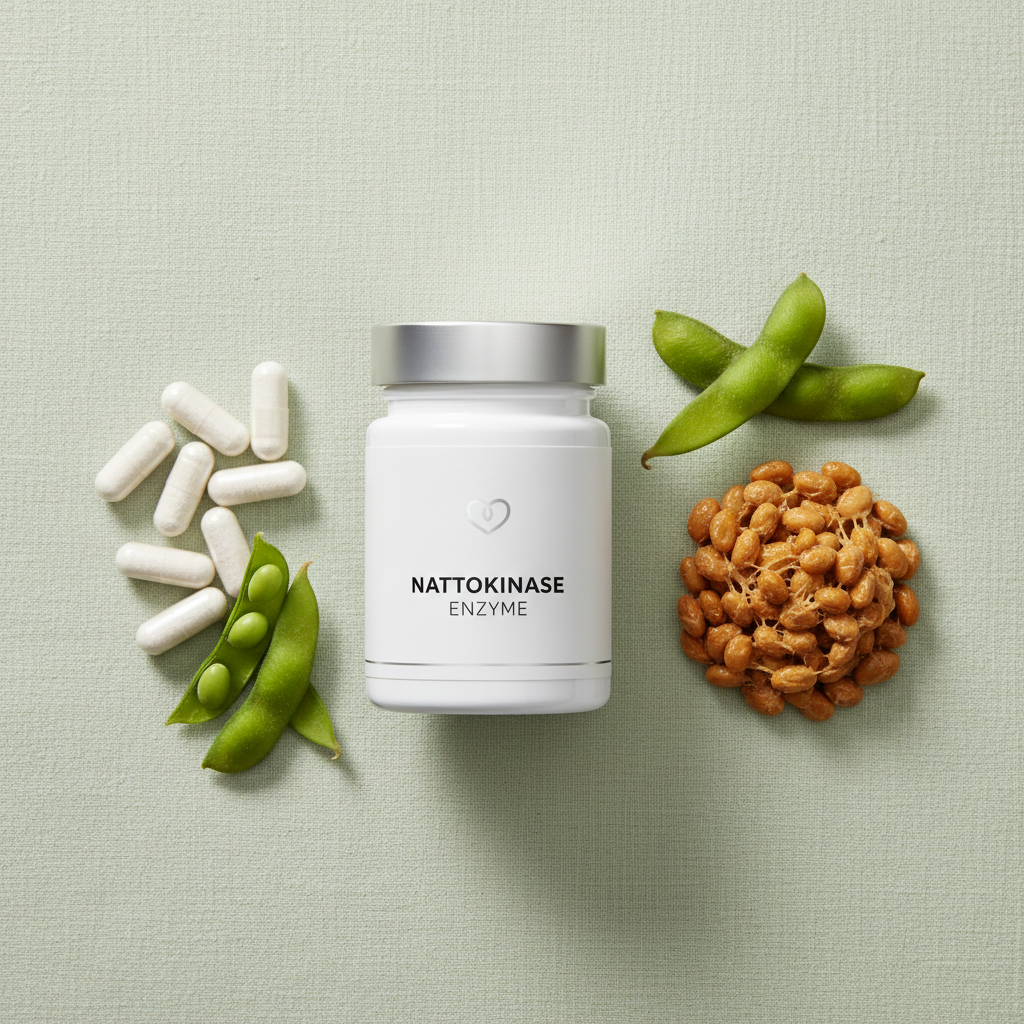
Nattokinase is a natural enzyme obtained from natto, a traditional Japanese food made by fermenting soybeans. This enzyme has attracted scientific interest due to its natural origin and its potential role in supporting blood circulation, cardiovascular health, and overall bodily balance.
Natto has been consumed for centuries in Japan and is recognized as a fermented food rich in bioactive compounds resulting from the natural fermentation process.
What is Nattokinase food supplement?
Nattokinase is an enzyme produced during the fermentation of natto by a specific bacterium called Bacillus subtilis.
During this fermentation process, various natural compounds are formed, contributing to natto's unique nutritional characteristics. Nattokinase is one of the most studied components of this traditional Japanese food.
As natto is not a regular part of the diet for many Western populations, nattokinase can also be found in food supplements.
What are the health benefits of Nattokinase?
Scientific research has studied nattokinase for its potential role in different health-related areas. Possible benefits include:
Support for blood circulation and cardiovascular health
Nattokinase has been studied for its interaction with natural processes related to blood circulation and coagulation balance.
Healthy blood circulation is essential for the proper transport of oxygen and nutrients throughout the body and for the normal functioning of tissues.
Maintenance of normal blood pressure levels
Some studies suggest that nattokinase may contribute to maintaining normal blood pressure levels under certain conditions.
Cardiovascular health depends on several factors, including a balanced diet, regular physical activity, and healthy lifestyle habits.
Balance of intestinal microbiota
Being derived from a fermented food, nattokinase has been studied in the context of the relationship between fermented foods, gut microbiota, and digestive balance.
The intestinal microbiota plays an important role in the normal functioning of the body and in supporting natural defenses.
What are the food sources of Nattokinase?
The main natural source of nattokinase is natto, a traditional Japanese food produced by fermenting soybeans.
The fermentation process used in natto production allows for the natural formation of this enzyme.
For people who do not regularly consume natto, nattokinase can be obtained through food supplements.
What other components may be present in this Nattokinase food supplement?
Some nattokinase supplements combine this enzyme with other natural ingredients to complement their formula.
Among the frequently used ingredients are:
Selenium – an essential mineral that contributes to the protection of cells against oxidative stress and to the normal functioning of the immune system.
Green tea extract – a natural source of plant compounds, including polyphenols, known for their antioxidant properties.
Dandelion extract – a plant traditionally used in food supplements due to its composition of natural compounds.
The composition of supplements may vary depending on the manufacturer.
Who should take this Nattokinase supplement?
Nattokinase may be considered by adults looking to supplement their diet and support:
- The maintenance of healthy blood circulation;
- Cardiovascular health;
- Overall bodily balance.
The use of food supplements should be part of a healthy lifestyle, associated with a varied and balanced diet.
What are the adverse effects of taking Nattokinase?
Nattokinase is generally well-tolerated when used according to recommendations.
However, due to its potential effect on processes related to blood coagulation and blood pressure, some precautions should be taken.
People taking anticoagulant or antiplatelet medications, such as aspirin or clopidogrel, should consult a healthcare professional before starting supplementation.
People taking blood pressure medication should also seek medical advice before using this supplement.
Can pregnant and breastfeeding women take this supplement?
Currently, there are insufficient studies confirming the safety of nattokinase use during pregnancy and breastfeeding.
As a precaution, pregnant or breastfeeding women should consult a healthcare professional before using this supplement.
What is the recommended dose and for how long can Nattokinase be taken?
There is currently no officially established daily dose for nattokinase.
Scientific studies have used different amounts, with doses between 100 and 200 mg per day often being studied.
The duration of use may vary according to individual objectives and manufacturer's recommendations.
It is advisable to always follow the instructions on the supplement label and seek advice from a healthcare professional when necessary.
Conclusion
Nattokinase is a natural enzyme derived from a traditional Japanese fermented food. Scientific research continues to explore its potential role in blood circulation, cardiovascular health, and general well-being.
Like all food supplements, nattokinase should be used as a complement to a varied and balanced diet and a healthy lifestyle.
The information presented in this article is for informational purposes only and does not replace medical advice. Food supplements should not be used as substitutes for a varied and balanced diet and a healthy lifestyle.
References
Chen, H., McGowan, E.M. et al. (2018) 'Nattokinase: A promising alternative in prevention and treatment of cardiovascular diseases', Biomarker Insights, 13, p. 1177271918785130.
Fujita, M., Ohnishi, K. et al. (2011) 'Antihypertensive effects of continuous oral administration of nattokinase and its fragments in spontaneously hypertensive rats', Biological and Pharmaceutical Bulletin, 34(11), pp. 1696–1701.
Hsia, C.-H., Shen, M.-C. et al. (2009) 'Nattokinase decreases plasma levels of fibrinogen, factor VII, and factor VIII in human subjects', Nutrition Research, 29(3), pp. 190–196.
Mari, D., Ogliari, G. et al. (2008) 'Hemostasis and ageing', Immunity & Ageing, 5, p. 12.
Nagata, C., Wada, K. et al. (2017) 'Dietary soy and natto intake and cardiovascular disease mortality in Japanese adults: The Takayama Study', American Journal of Clinical Nutrition, 105(2), pp. 426–431.
Sumi, H., Hamada, H. et al. (1987) 'A novel fibrinolytic enzyme (nattokinase) in the vegetable cheese Natto; a typical and popular soybean food in the Japanese diet', Experientia, 43(10), pp. 1110–1111.
Takahashi, K., Ishikane, M. et al. (2022) 'Duration of infectious virus shedding by SARS-CoV-2 Omicron variant-infected vaccinees', Emerging Infectious Diseases, 28(5), pp. 998–1001.
Takabayashi, T., Imoto, Y. et al. (2017) 'Nattokinase, a profibrinolytic enzyme, effectively shrinks nasal polyp tissue and decreases viscosity of mucus', Allergology International, 66(4), pp. 594–602.
Tanikawa, T., Kiba, Y. et al. (2022) 'Degradative effect of nattokinase on spike protein of SARS-CoV-2', Molecules, 27(17), p. 5405.
Tran, H.T.T., Gigl, M. et al. (2021) 'In vitro effect of Taraxacum officinale leaf aqueous extract on the interaction between ACE2 cell surface receptor and SARS-CoV-2 spike protein D614 and four mutants', Pharmaceuticals, 14(10), p. 1055.
Wang, P., Gao, X. et al. (2020) 'Bacillus natto regulates gut microbiota and adipose tissue accumulation in a high-fat diet mouse model of obesity', Journal of Functional Foods, 68, p. 103923.

Leave a comment
This site is protected by hCaptcha and the hCaptcha Privacy Policy and Terms of Service apply.