

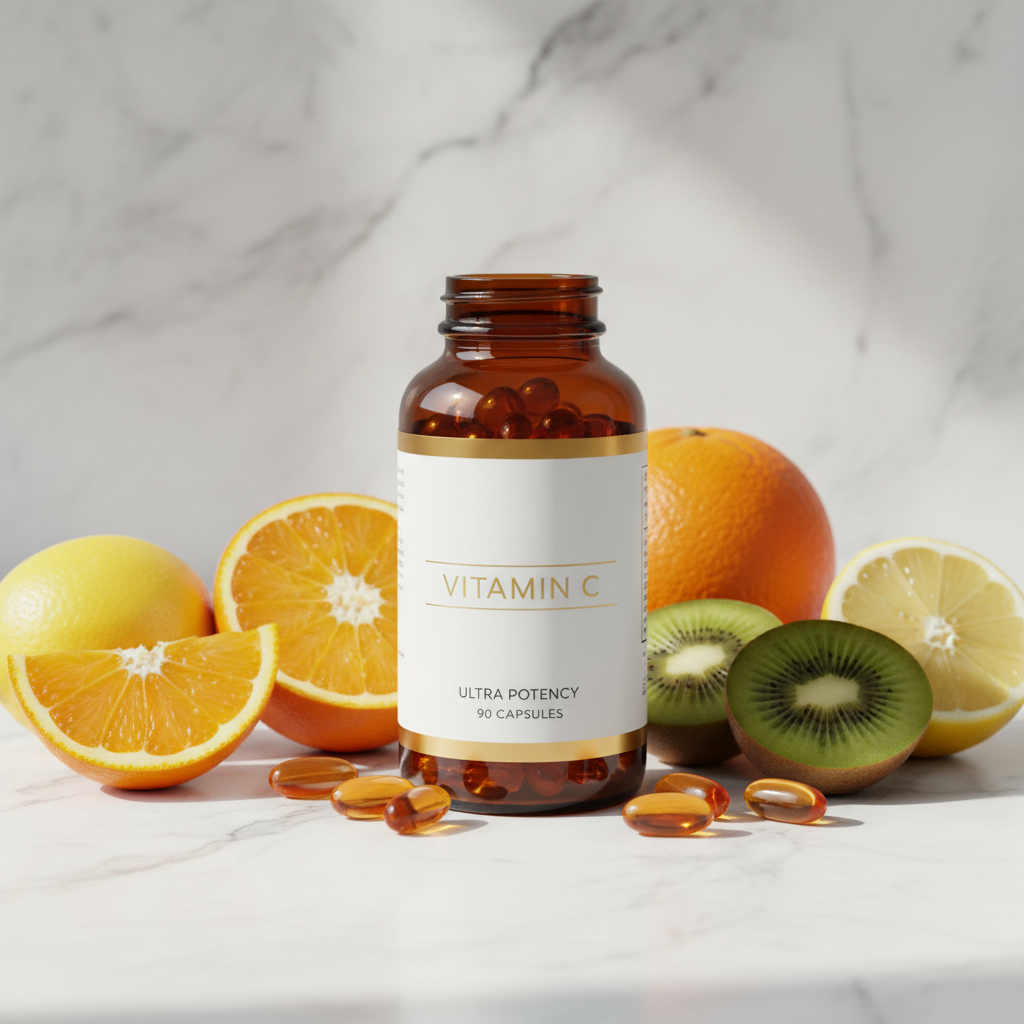
What is vitamin C?
Vitamin C, also known as ascorbic acid, is an essential vitamin, as the human body cannot produce it. Being a water-soluble vitamin, it is not stored in significant quantities in the body, so it must be obtained daily through diet or, when necessary, through food supplements.
How can vitamin C be obtained?
The best food sources of vitamin C are found in fruits and vegetables, namely citrus fruits (lemon, orange, tangerine, and grapefruit), kiwi, melon, mango, pineapple, strawberry, tomato, Brussels sprouts, cabbage, cauliflower, and watercress. Some fortified foods can also provide vitamin C, as can food supplements.
As vitamin C is heat-sensitive, it is recommended to consume fruits and vegetables raw or only lightly cooked, in order to preserve their vitamin content (Institute of Medicine, 2000; Carr & Frei, 1999).
What are the health benefits of vitamin C?
Vitamin C performs several important functions in the body and contributes to:
- The protection of cells against oxidative stress, thanks to its antioxidant properties.
- Normal collagen formation for normal skin function.
- Normal collagen formation for the normal function of bones, cartilage, teeth, gums, and blood vessels.
- The normal functioning of the immune system.
- The reduction of tiredness and fatigue.
- Increased absorption of iron from food.
These functions correspond to authorized health claims for vitamin C by the European Food Safety Authority (EFSA) (EFSA NDA Panel, 2010).
Who should consider vitamin C supplements?
Vitamin C deficiency is rare in people who maintain a diet rich in fruits and vegetables. However, certain groups may benefit from a higher intake of this nutrient.
Smokers have higher vitamin C needs due to the increased oxidative stress caused by smoking. The increased production of free radicals can increase the body's consumption of this vitamin (Institute of Medicine, 2000).
Some studies suggest that regular vitamin C supplementation may slightly reduce the duration of the common cold, particularly in individuals subjected to intense physical exertion or exposed to cold environments. However, scientific evidence does not show that it prevents the onset of the common cold in the general population (Hemilä & Chalker, 2013).
Vitamin C also increases the intestinal absorption of non-heme iron, and its association with iron-rich foods or supplements is often recommended when there is a risk of deficiency (EFSA NDA Panel, 2010).
What are the symptoms of vitamin C deficiency?
Severe vitamin C deficiency can lead to scurvy, a disease currently rare in developed countries.
Symptoms may include:
- Fatigue and tiredness;
- Muscle weakness;
- Joint pain;
- Increased susceptibility to infections;
- Inflammation and bleeding of the gums;
- Bleeding in the skin and mucous membranes;
- Loose teeth;
- Dry and rough skin;
- Poor wound healing.
In prolonged cases, deficiency can compromise normal collagen formation and affect various body tissues (Hodges et al., 1969; Institute of Medicine, 2000).
What are the adverse effects of excessive vitamin C consumption?
Vitamin C is generally considered safe when consumed in recommended doses. However, high doses can cause gastrointestinal side effects, namely:
- Diarrhoea;
- Abdominal pain;
- Flatulence;
- Nausea.
If these symptoms occur, it is recommended to stop supplementation and seek advice from a healthcare professional.
Conclusion
Vitamin C is an essential nutrient that performs several important functions in the body, including protecting cells against oxidative stress, normal collagen formation, normal immune system function, and increased iron absorption.
Although a diet rich in fruits and vegetables is, for most people, sufficient to ensure adequate vitamin C intake, supplementation can be a practical way to complement the diet in situations of increased needs or insufficient intake.
Like any food supplement, vitamin C should be used responsibly, respecting the recommended daily dose and integrated into a healthy lifestyle and a varied and balanced diet.
The information presented in this article is for informational purposes only and does not replace medical advice or that of a healthcare professional. Food supplements should not be used as substitutes for a varied and balanced diet and a healthy lifestyle.
Carr, A.C. & Frei, B., 1999. Toward a new recommended dietary allowance for vitamin C based on antioxidant and health effects in humans. American Journal of Clinical Nutrition, 69(6), pp.1086–1107.
Carr, A.C. & Maggini, S., 2017. Vitamin C and Immune Function. Nutrients, 9(11), p.1211. https://doi.org/10.3390/nu9111211
EFSA Panel on Dietetic Products, Nutrition and Allergies (NDA), 2010. Scientific Opinion on the substantiation of health claims related to vitamin C. EFSA Journal, 8(10), p.1815.
Hemilä, H. & Chalker, E., 2013. Vitamin C for preventing and treating the common cold. Cochrane Database of Systematic Reviews, Issue 1, CD000980.
Hodges, R.E., Hood, J., Canham, J.E., Sauberlich, H.E. & Baker, E.M., 1969. Clinical manifestations of ascorbic acid deficiency in man. American Journal of Clinical Nutrition, 22, pp.535–548.
Institute of Medicine (US), 2000. Dietary Reference Intakes for Vitamin C, Vitamin E, Selenium, and Carotenoids. Washington, DC: National Academies Press.
Padayatty, S.J., Katz, A., Wang, Y., Eck, P., Kwon, O., Lee, J.H., Chen, S., Corpe, C., Dutta, A., Dutta, S.K. & Levine, M., 2003. Vitamin C as an antioxidant: evaluation of its role in disease prevention. Journal of the American College of Nutrition, 22(1), pp.18–35.

Leave a comment
This site is protected by hCaptcha and the hCaptcha Privacy Policy and Terms of Service apply.