What is quercetin?
Quercetin is a flavonol, belonging to the flavonoid family, a group of natural compounds produced by plants, also known as phytonutrients or phytochemicals. It is naturally present in various fruits, vegetables, herbs, and plant-based drinks.
Quercetin has been widely studied due to its antioxidant properties observed in laboratory studies and its potential role in human health.
What are the potential benefits of quercetin?
Scientific research has studied quercetin in various health areas. Although many results are promising, for most uses there is not yet sufficient clinical evidence to confirm consistent benefits in humans.
Areas currently being studied include:
- antioxidant activity;
- modulation of inflammatory response;
- immune response;
- cardiovascular health;
- metabolism;
- respiratory health;
- healthy aging.
Some clinical studies suggest modest benefits in certain conditions, but more high-quality clinical trials are needed before definitive conclusions can be established.
What are the dietary sources of quercetin?
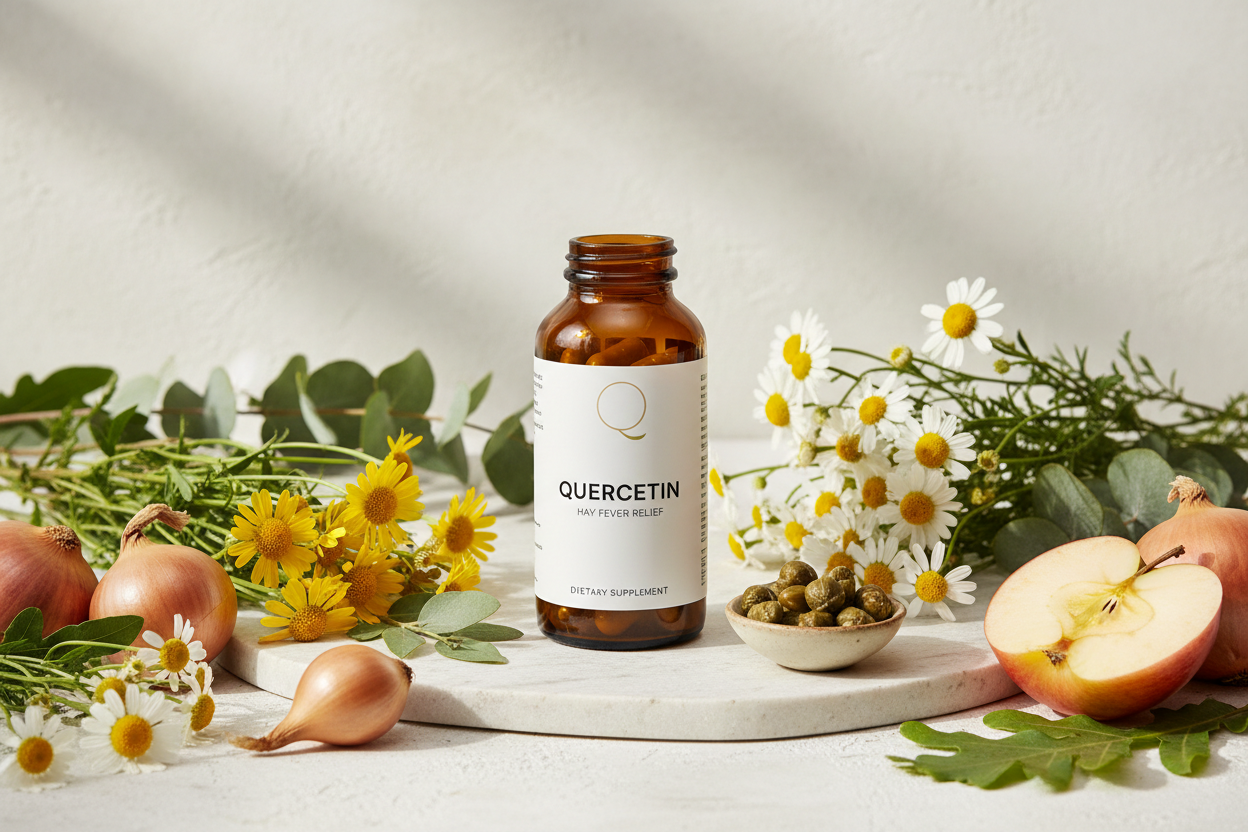
Quercetin is naturally found in various foods, including:
- onions;
- apples;
- broccoli;
- cabbage;
- red lettuce;
- tomatoes;
- asparagus;
- berries;
- elderberry;
- oregano;
- green tea;
- capers.
The amount ingested depends on the type of diet and the food preparation method.
Who might consider a quercetin supplement?
A varied diet rich in plant-based foods is usually the main source of quercetin.
Food supplements may be considered by adults who wish to complement their intake of this flavonoid, always as a complement to a varied and balanced diet and a healthy lifestyle.
Currently, there are no EFSA-authorized health claims for quercetin.
What is the usual dose?
In published clinical studies, doses between 500 mg and 1000 mg per day have been used, although the dose may vary depending on the research objective.
The recommended dose should always be that indicated by the manufacturer or healthcare professional.
What are the possible side effects?
Quercetin is generally well tolerated when used at commonly studied doses.
Described side effects are generally mild and may include:
- gastrointestinal discomfort;
- headache;
- tingling sensation in some people.
In case of prolonged use or simultaneous use of medicines, advice from a healthcare professional is recommended.
Can quercetin be used during pregnancy and breastfeeding?
Currently, there is limited information on the safety of quercetin supplementation during pregnancy and breastfeeding.
For this reason, the use of quercetin supplements in these situations should only be done with the advice of a healthcare professional.
Conclusion
Quercetin is a flavonoid naturally present in various plant-based foods and one of the most studied phytochemicals by the scientific community. Although research has identified potential antioxidant and anti-inflammatory mechanisms, clinical evidence is still developing, and currently there are no EFSA-authorized health claims for this compound.
A varied diet, rich in fruits, vegetables, herbs, and other plant foods, remains the primary way to obtain quercetin naturally.
The information presented in this article is for informational purposes only and does not replace medical advice. Food supplements should not be used as substitutes for a varied and balanced diet and a healthy lifestyle.
References
D'Andrea, G. (2015) 'Quercetin: A flavonol with multifaceted therapeutic applications?', Fitoterapia, 106, pp. 256–271.
Li, Y., Yao, J., Han, C., Yang, J., Chaudhry, M.T., Wang, S., Liu, H. and Yin, Y. (2016) 'Quercetin, inflammation and immunity', Nutrients, 8(3), 167.
Ferraz, C.R. et al. (2020) 'Therapeutic potential of flavonoids in pain and inflammation', Molecules, 25(3), 762.
Costa, L.G. et al. (2016) 'Mechanisms of neuroprotection by quercetin', Oxidative Medicine and Cellular Longevity, 2016, 2986796.
Serban, M.C. et al. (2016) 'Effects of Quercetin on Blood Pressure: A Systematic Review and Meta-analysis of Randomized Controlled Trials', Journal of the American Heart Association, 5(7), e002713.
Javadi, F. et al. (2017) 'The effect of quercetin on inflammatory factors and clinical symptoms in women with rheumatoid arthritis', Journal of the American College of Nutrition, 36(1), pp. 9–15.
Yang, F. et al. (2015) 'Quercetin in prostate cancer: Chemotherapeutic and chemopreventive effects', Oncology Reports, 33(6), pp. 2659–2668.

Leave a comment
This site is protected by hCaptcha and the hCaptcha Privacy Policy and Terms of Service apply.