
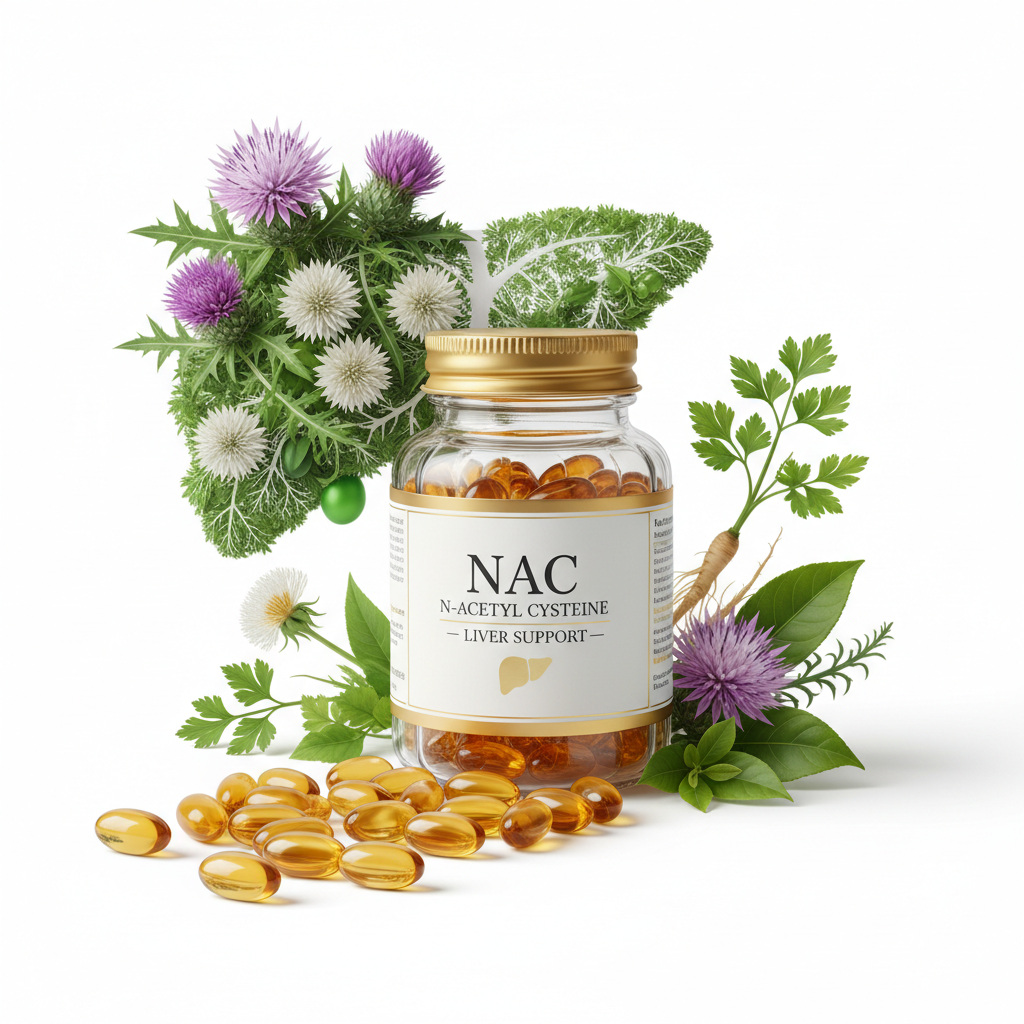
What is N-acetylcysteine (NAC)?
N-acetylcysteine (NAC) is a stable form of L-cysteine, an amino acid used by the body to synthesize glutathione, a compound naturally present in cells.
NAC has been used for several decades in clinical settings and is also available as a dietary supplement.
How does NAC work?
After being absorbed, NAC provides cysteine to the body, an amino acid necessary for glutathione production.
Glutathione participates in various cellular processes related to redox balance and protecting cells against reactive molecules produced during normal metabolism.
What are the studied benefits of NAC?
Scientific research has evaluated NAC in various areas of health.
Published studies have investigated its potential role in:
- oxidative stress balance;
- respiratory health;
- glucose metabolism;
- male and female fertility;
- nervous system;
- immune response.
While many of these results are promising, more research is needed to confirm the effectiveness of NAC supplementation in several of these situations.
What are the dietary sources of cysteine?
Cysteine is naturally found in protein-rich foods, including:
- chicken meat;
- turkey;
- eggs;
- cheese;
- sunflower seeds;
- legumes.
Who might consider supplementation?
NAC supplementation may be considered by adults who wish to supplement their intake of this amino acid, always in accordance with their individual needs and, when appropriate, with advice from a healthcare professional.
What is the usual dosage?
Scientific studies have used doses between 600 mg and 1800 mg per day, depending on the objective studied.
The recommended dose should always adhere to the instructions on the supplement label.
Are there any side effects?
NAC is generally well tolerated when used at recommended doses.
The most frequently reported side effects include:
- nausea;
- gastrointestinal discomfort;
- diarrhoea;
- constipation.
People who use anticoagulant medications, antiplatelet agents, or blood pressure control medications should consult a healthcare professional before starting supplementation.
Pregnancy and breastfeeding
There is insufficient evidence to recommend the use of NAC supplements during pregnancy or breastfeeding without medical advice.
Conclusion
N-acetylcysteine (NAC) is a stable form of L-cysteine and has been widely studied due to its role as a precursor to glutathione.
Although research continues to explore its potential in different areas of health, the use of supplements should be part of a varied and balanced diet and a healthy lifestyle.
References
Puigserver, P. (2018). Signaling transduction and metabolomics. In: Hematology. Elsevier, pp. 68–78.
Tenório, M.C.D.S., Graceliano, N.G., Moura, F.A., Oliveira, A.C.M. and Goulart, M.O.F. (2021). N-acetylcysteine (NAC): Impacts on Human Health. Antioxidants, 10(6), 967. https://doi.org/10.3390/antiox10060967
Pedre, B., Barayeu, U., Ezeriņa, D. and Dick, T.P. (2021). The mechanism of action of N-acetylcysteine (NAC): The emerging role of H₂S and sulfane sulfur species. Pharmacology & Therapeutics, 228, 107916. https://doi.org/10.1016/j.pharmthera.2021.107916
Mokhtari, V., Afsharian, P., Shahhoseini, M., Kalantar, S.M. and Moini, A. (2017). A review on various uses of N-acetyl cysteine. Cell Journal, 19(1), pp. 11–17.
Minarini, A., Ferrari, S., Galletti, M., Giambalvo, N., Perrone, D., Rioli, G. and Galeazzi, G.M. (2017). N-acetylcysteine in the treatment of psychiatric disorders: Current status and future prospects. Expert Opinion on Drug Metabolism & Toxicology, 13(3), pp. 279–292.
Ooi, S.L., Green, R. and Pak, S.C. (2018). N-acetylcysteine for the treatment of psychiatric disorders: A review of current evidence. BioMed Research International, 2018, 2469486.
Pirabbasi, E., Shahar, S., Manaf, Z.A., Rajab, N.F. and Manap, R.A. (2016). Efficacy of ascorbic acid and N-acetylcysteine supplementation on nutritional and antioxidant status of male COPD patients. Journal of Nutritional Science and Vitaminology, 62(1), pp. 54–61.
Calverley, P., Rogliani, P., Matera, M.G. and Cazzola, M. (2021). Safety of N-acetylcysteine at high doses in chronic respiratory diseases: A review. Drug Safety, 44, pp. 273–290.
Jannatifar, R., Parivar, K., Roodbari, N.H. and Nasr-Esfahani, M.H. (2019). Effects of N-acetyl-L-cysteine supplementation on sperm quality, chromatin integrity and oxidative stress in infertile men. Reproductive Biology and Endocrinology, 17, 24.
Li, X., Wang, Z., Wang, Q., et al. (2022). Role of N-acetylcysteine treatment in women of advanced age undergoing IVF/ICSI cycles: A prospective study. Frontiers in Medicine, 9, 917146.
Devi, N., Boya, C. and Singh, N. (2020). N-acetyl-cysteine as adjuvant therapy in female infertility: A systematic review and meta-analysis. Journal of Basic and Clinical Physiology and Pharmacology, 32(5), pp. 899–910.
Diotallevi, M., Checconi, P., Palamara, A.T. and De Angelis, M. (2017). Glutathione fine-tunes the innate immune response toward antiviral pathways in a macrophage cell line independently of its antioxidant properties. Frontiers in Immunology, 8, 1239.
Shi, Z. and Puyo, C.A. (2020). N-acetylcysteine to combat COVID-19: An evidence review. Therapeutics and Clinical Risk Management, 16, pp. 1047–1055.
Zang, Q., Ju, Y., Ma, Y., et al. (2018). N-acetylcysteine improves oxidative stress and inflammatory response in patients with community-acquired pneumonia: A randomized controlled trial. Medicine, 97(45).
Pereira, S., Shah, A., George Fantus, I. and Giacca, A. (2015). Effect of N-acetyl-L-cysteine on insulin resistance caused by prolonged free fatty acid elevation. Journal of Endocrinology, 225(1), pp. 1–7.
Lasram, M.M., Dhouib, I.B., Annabi, A., El Fazaa, S. and Gharbi, N. (2015). A review on the possible molecular mechanism of action of N-acetylcysteine against insulin resistance and type 2 diabetes development. Clinical Biochemistry, 48(16–17), pp. 1200–1208.


Leave a comment
This site is protected by hCaptcha and the hCaptcha Privacy Policy and Terms of Service apply.