

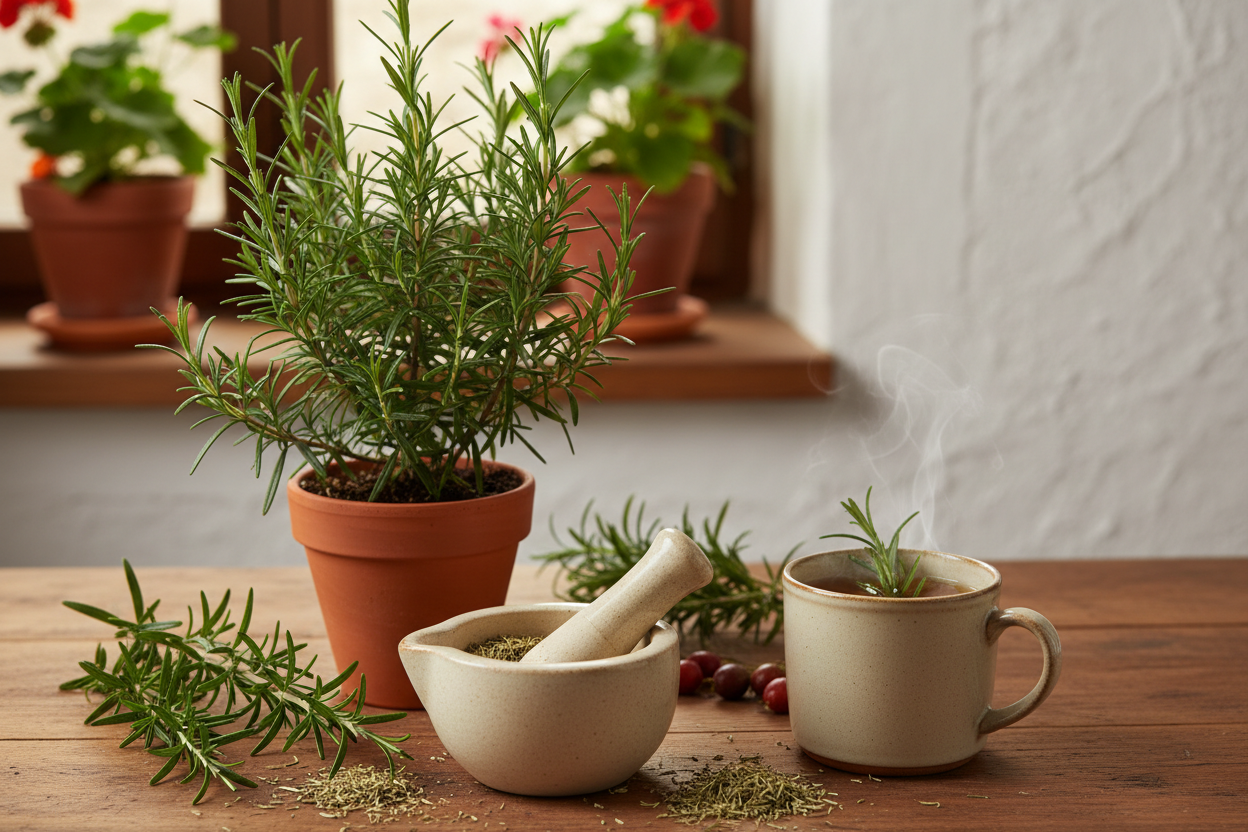
Rosemary (Rosmarinus officinalis): The Aromatic Herb that Perfumes History, Cuisine, and Tradition
Few plants are as recognized and appreciated as rosemary (Rosmarinus officinalis). Present in gardens, vegetable patches, and kitchens for thousands of years, this aromatic herb is part of the Mediterranean region's identity and continues to hold a special place in Portuguese gastronomy.
At Hands on Earth, we believe every plant has a story to tell. Rosemary is an excellent example of this: an aromatic herb with an intense aroma, deeply connected to nature, tradition, and authentic flavors.
A plant with roots in the Mediterranean
Rosemary is a perennial shrub belonging to the Lamiaceae family, the same family as lavender, sage, thyme, and mint.
It originates from the coastal regions of the Mediterranean, where it grows naturally on sunny slopes and in well-drained soils. Its scientific name, Rosmarinus officinalis, is derived from Latin and traditionally means "dew of the sea," a reference to the environment where it thrived spontaneously.
Over the centuries, it spread throughout Europe and became one of the most cultivated aromatic herbs in vegetable gardens and other gardens.
The legend of the blue flowers
Among the many stories associated with rosemary, one of the best known belongs to Christian tradition.
Legend has it that rosemary flowers were originally white. During the Holy Family's flight to Egypt, Mary is said to have placed her blue cloak over a rosemary bush while seeking shelter. When she removed the cloak, the flowers had acquired a delicate blue hue, a color that still characterizes many varieties of this plant today.
Regardless of its origin, this legend transformed rosemary into a symbol of protection, hope, and fidelity.
Another popular tradition claimed that rosemary would live for thirty-three years, a symbolic association with the age attributed to Christ.
A plant full of symbolism
Rosemary has always held a special place in European traditions.
In Elizabethan times, it was common for newlyweds to carry a sprig of rosemary during the wedding as a symbol of love, loyalty, and commitment. Guests also received small sprigs tied with golden ribbons, representing friendship and good wishes for the future.
In different cultures, rosemary was also associated with memory and remembrance, becoming a frequent presence at family celebrations and important ceremonies.
The aroma that crossed generations
Long before modern air fresheners existed, aromatic plants were used to perfume spaces.
Rosemary was often placed in homes, kitchens, and gardens for its fresh and pleasant aroma. In various regions of Europe, its branches were burned to release the plant's natural fragrance and create more welcoming environments.
Even today, its intense aroma remains one of its most appreciated characteristics.
Rosemary in Portuguese cuisine
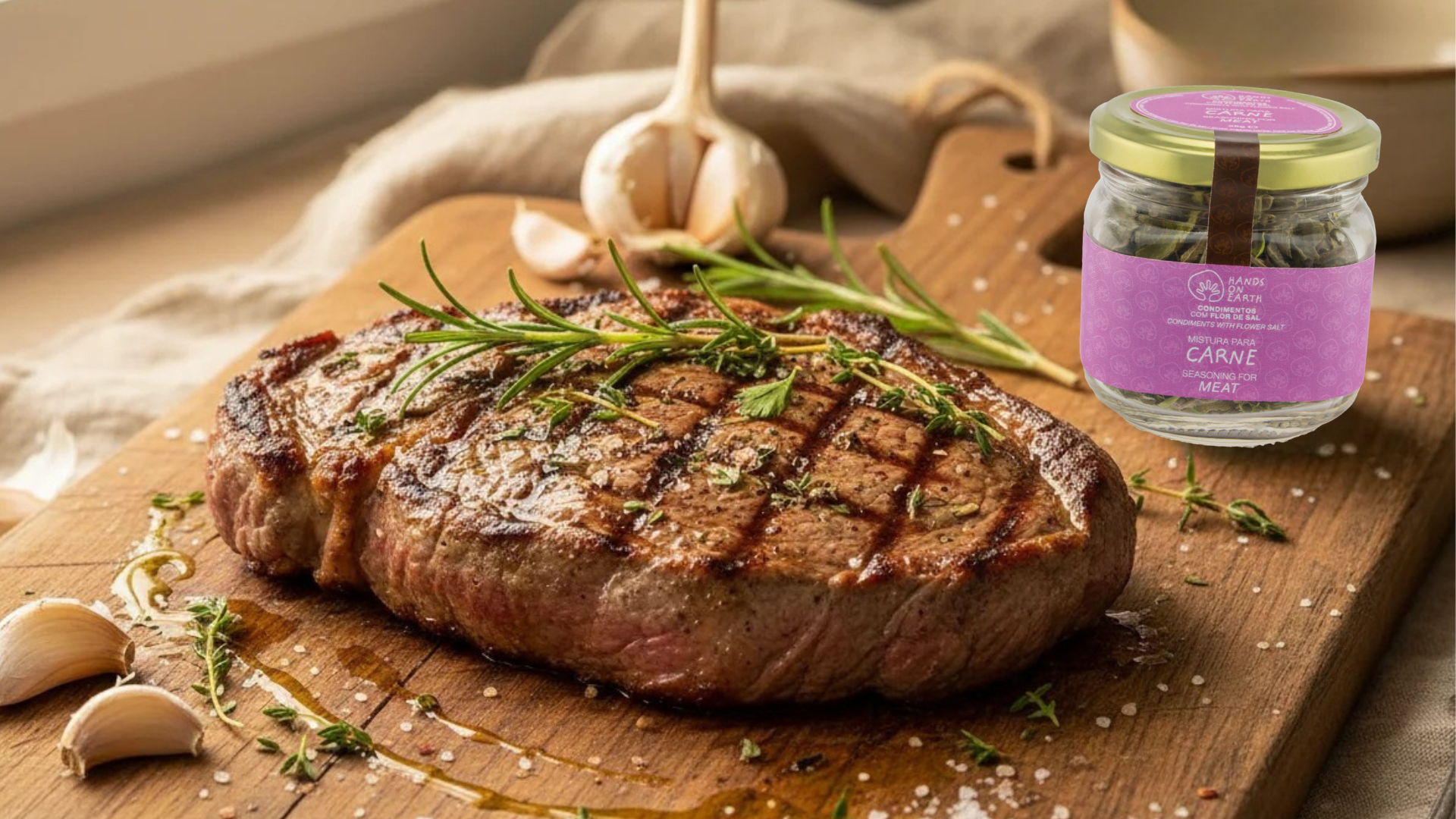
If there is an indispensable aromatic herb in Mediterranean cuisine, it is rosemary.
Its fragrant leaves lend depth of flavor to countless traditional and contemporary recipes.
It is especially appreciated in:
- Roasted kid goat and lamb
- Oven-baked chicken
- Roasted fish
- Roasted potatoes
- Oven-baked vegetables
- Mushrooms
- Eggs
- Focaccias and artisan breads
- Marinades
- Flavored olive oils
Because it is quite aromatic, small quantities are usually enough to enrich a dish.
A naturally aromatic infusion
In addition to culinary use, rosemary can be enjoyed as an infusion.
Prepared only with dried leaves, it offers a drink with an intense aroma and fresh, slightly tart flavor. It can be consumed hot on colder days or served cold during the summer.
Naturally caffeine and theine-free, it is a popular choice for those seeking a herbal drink for any time of day.
Organic rosemary: quality from the source
At Hands on Earth, we believe that quality begins with cultivation.
Our rosemary comes from organic farming, where plants are cultivated with respect for the soil, biodiversity, and natural cycles.
After harvesting, the leaves are carefully dried to preserve their characteristic aroma and quality, maintaining all the authenticity of this Mediterranean plant.
Discover Hands on Earth rosemary
Whether used to flavor your favorite recipes or to prepare an aromatic infusion, rosemary remains one of the most versatile plants in Mediterranean tradition.
At Hands on Earth, you will find:
- Organic Aromatic Herbs, ideal for cooking with natural and flavorful ingredients.
- Organic Rosemary Herbal Tea, prepared exclusively with dried leaves of Rosmarinus officinalis.
We also invite you to explore our collection of Teas and Infusions, as well as our Organic Aromatic Herbs, and discover plants that are part of Portuguese tradition, cultivated with respect for nature and the authenticity of their aromas.
References
Ferreira, H.P., 2010. Assessment report on Rosmarinus officinalis L., aetheroleum and Rosmarinus officinalis L., folium. Committee on Herbal Medicinal Products (HMPC).
González-Minero, F.J., Bravo-Díaz, L. and Ayala-Gómez, A., 2020. Rosmarinus officinalis L.(Rosemary): An ancient plant with uses in personal healthcare and cosmetics. Cosmetics, 7(4), p.77.
Brickell, C., 2012. RHS Encyclopedia of Gardening. Dorling Kindersley Ltd.
Grieve, M., 2013. A modern herbal, Vol. II (Vol. 2). Courier Corporation.
Chevallier, A., 2016. Encyclopedia of herbal medicine: 550 herbs and remedies for common ailments. Penguin.


Leave a comment
This site is protected by hCaptcha and the hCaptcha Privacy Policy and Terms of Service apply.