


What do we know about the safety of the additives and excipients used in food supplements? Does the presence of certain ingredients pose a health risk?
In this article, we explain how to assess the safety of these ingredients, the difference between hazard and risk, and what scientific studies can tell us. We analyze the available evidence on ingredients such as titanium dioxide, maltodextrin, sorbitol, and sucralose, as well as some common excipients, to help you interpret labels and make more informed choices.
1. What determines the safety of an ingredient?
The safety of an ingredient should not be assessed solely by its name or its presence on a label. It is important to consider several factors:
- The dose: the amount ingested can influence the effects of a substance.
- The frequency and duration of consumption: occasional exposure is not necessarily equivalent to prolonged daily consumption.
- Total exposure: it is important to consider the quantities coming from different foods, supplements, and other sources.
- Individual characteristics: tolerance can vary, particularly in people with gastrointestinal sensitivity or certain allergies.
- The quality of scientific evidence: results from laboratory or animal studies cannot be automatically extrapolated to humans.
Identifying a possible biological effect does not necessarily mean demonstrating a health risk under usual conditions of use.
2. What is the difference between hazard and health risk?
Hazard is the potential of a substance to cause a harmful effect under certain conditions.
Risk is the probability of that effect occurring under real conditions of exposure, taking into account factors such as the dose and duration of consumption.
Practical example: a substance may cause harmful effects in the laboratory when tested at high doses. This does not mean that the small amount used in a supplement poses the same risk. To assess the real risk, it is necessary to consider exposure and the available scientific evidence.
3. How to interpret scientific studies?
Different types of studies provide complementary information. None should be interpreted in isolation.
| Type of evidence | What it can indicate |
|---|---|
| Laboratory studies (in vitro) | They identify possible biological effects and mechanisms that deserve investigation. |
| Animal studies | They provide information on biological effects, but the results may not be directly applicable to humans. |
| Human studies | They investigate effects in people, although the results depend on the study design, dose, and participant characteristics. |
| Systematic reviews and regulatory assessments | They analyze multiple studies to evaluate the consistency, quality, and limitations of the available evidence. |
4. Does having an E number mean an ingredient is harmful?
No. E numbers identify food additives in the European Union nomenclature. Their presence on a label does not, in itself, mean that a product is dangerous or of low quality.
The use of an additive depends on authorized conditions, including the foods in which it can be used and the permitted levels. Authorization does not, however, mean that all products containing it are equally suitable for everyone.
It is important to distinguish between ingredients with identified safety concerns, ingredients that may cause undesirable effects at certain doses or in certain people, and ingredients whose safety assessments are reassuring under the considered conditions.
It is also important to remember that not all excipients are food additives or have an E number.
5. Which ingredients raise safety questions?
A. Titanium dioxide (E171)
Main concern: potential genotoxicity.
In 2021, the European Food Safety Authority (EFSA) concluded that it was not possible to rule out concerns related to the genotoxicity of titanium dioxide. Following this assessment, the European Commission withdrew authorization for its use as a food additive, including in food supplements, through Regulation (EU) 2022/63 (1).
B. Maltodextrin
Potential concern: possible effects on intestinal physiology.
Maltodextrin is a carbohydrate used as a bulking agent or auxiliary ingredient. A 2022 systematic review analyzed clinical trials in which it was used as a placebo and identified signs of possible changes in intestinal physiology parameters. However, the studies differed in doses, duration, and the populations studied, so the results should be interpreted with caution (2).
These results do not demonstrate that the amounts usually used as an excipient in supplements cause intestinal diseases.
C. Sorbitol
Potential concern: gastrointestinal symptoms, especially in sensitive people.
Sorbitol is a polyol used as a sweetener and bulking agent. Its incomplete absorption can draw water into the intestine and cause abdominal bloating, flatulence, discomfort, and diarrhea, depending on the dose and individual sensitivity. A 2017 systematic review analyzed the effects of polyols on gastrointestinal health, including in people with irritable bowel syndrome (IBS) (3).
Sorbitol is not intrinsically toxic, but the amount consumed is relevant, especially for people with digestive sensitivity.
D. Sucralose
Potential concern: possible effects on the gut microbiota and glucose metabolism.
Sucralose is a sweetener used in some supplements. Human studies have identified possible changes in the gut microbiota and in glucose and insulin responses, but the results vary and the clinical relevance remains uncertain (4, 5).
A 2024 laboratory study also identified changes in the microbiota after exposure to various food additives, including sucralose. These results do not demonstrate that consuming supplements with sucralose causes intestinal diseases (6).
6. What about the most common excipients?
The presence of an excipient does not, in itself, mean that a supplement is of low quality or poses a health risk.
Microcrystalline cellulose (E460(i))
Used as a bulking agent and to provide structure to tablets, it was re-evaluated by EFSA in 2018. The assessment did not identify any safety concerns at the reported uses and exposure levels (7).
Magnesium stearate (E470b)
Magnesium stearate is used as a lubricant in the manufacture of tablets and capsules. EFSA did not identify any safety concerns for magnesium salts of fatty acids (E470b) at the evaluated uses and exposure levels (8). A study by Hobbs et al. also found no genotoxic potential in the tests performed (9).
These results are reassuring, although they do not allow us to conclude that all possible effects are fully understood.
Silicon dioxide (E551)
Used as an anti-caking agent to prevent the formation of clumps in powders, it was re-evaluated by EFSA in 2024. The assessment did not identify any safety concerns at the evaluated food uses and exposure levels, although limitations were noted in the data regarding certain particle characteristics (10).
7. What about gelatin and HPMC capsules?
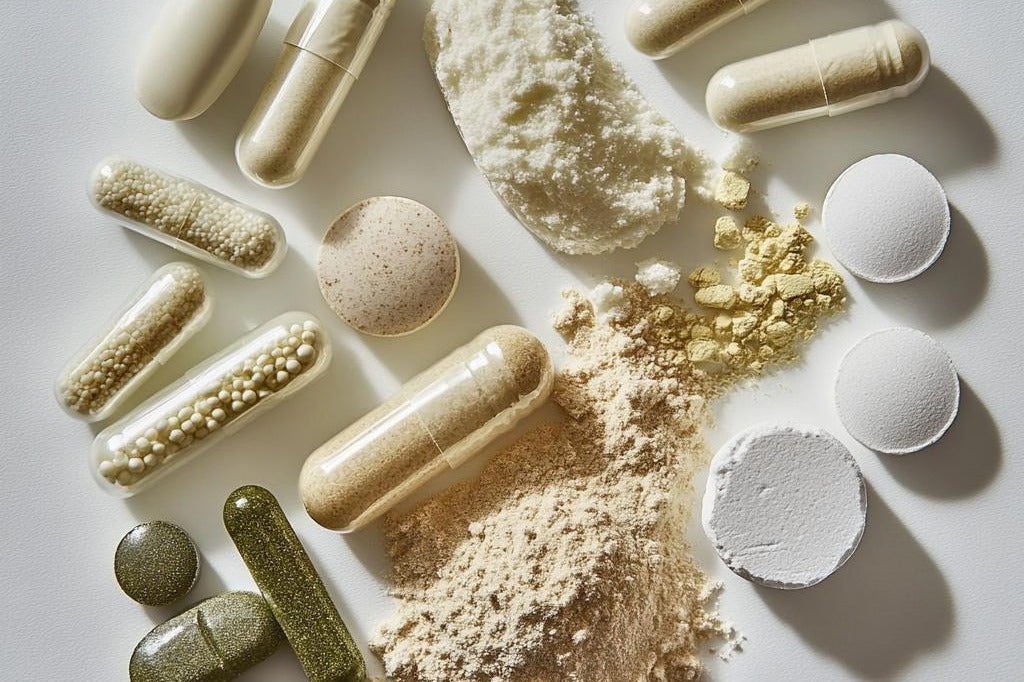
Gelatin, of animal origin, and hydroxypropyl methylcellulose (HPMC), derived from cellulose, are materials used in the manufacture of capsules.
Gelatin capsules are not suitable for vegans and may not be suitable for some vegetarians. HPMC capsules are generally suitable for vegetarian and vegan diets, although the suitability of the complete product also depends on the other ingredients.
The choice between the two does not, in itself, indicate differences in the safety or quality of the supplement.
8. How to make more informed choices?
When choosing a food supplement, it is worth considering:
- The function of the ingredients: understand the purpose of both the active ingredients and the excipients.
- The amount used: when available, evaluate the daily dose and not just the presence of an ingredient.
- Individual tolerance: be aware of ingredients that may trigger digestive symptoms or other undesirable effects.
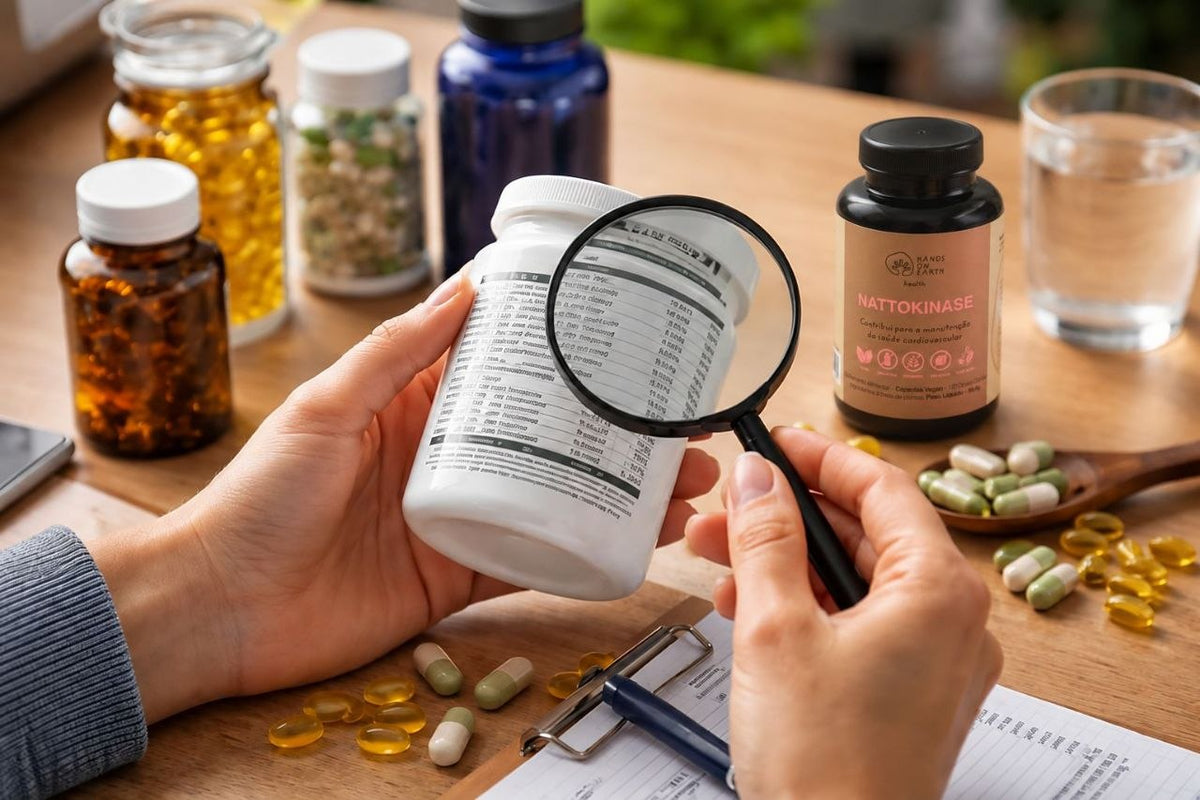
- Label transparency: check the composition, recommended dose, and manufacturer information.
- Overall product quality: consider traceability, quality controls, and regulatory compliance.
A shorter list of ingredients may be a personal preference, but it does not, in itself, guarantee greater safety or efficacy. Similarly, the presence of an authorized additive does not, by itself, demonstrate that a supplement has superior quality.
Conclusion
Not all additives and excipients are causes for concern. Some ingredients raise specific safety questions, others may cause effects depending on the dose or individual sensitivity, and several common excipients have reassuring assessments under the conditions studied.
The most important thing is to interpret scientific evidence in its context, distinguish hazard from risk, and evaluate the composition, quantities, and overall quality of the supplement, rather than automatically considering any ingredient with an unfamiliar name to be harmful.
Want to know how to interpret a supplement label?
In the next article of our Health Guide, we explain how to read a food supplement label, identify active ingredients and excipients, interpret doses, and understand what information you should check before choosing a product.
Read also: [How to Read a Food Supplement Label →]
Scientific and regulatory references
(1) Titanium dioxide
EFSA Panel on Food Additives and Flavourings. Safety assessment of titanium dioxide (E171) as a food additive. EFSA Journal. 2021;19(5):6585.
Commission Regulation (EU) 2022/63.
(2) Maltodextrin
Almutairi R et al. Validity of food additive maltodextrin as placebo and effects on human gut physiology: systematic review of placebo-controlled clinical trials. European Journal of Nutrition. 2022;61:2853–2871.
(3) Sorbitol and other polyols
Lenhart A, Chey WD. A Systematic Review of the Effects of Polyols on Gastrointestinal Health and Irritable Bowel Syndrome. Advances in Nutrition. 2017;8(4):587–596.
(4) Non-nutritive sweeteners and glucose tolerance
Suez J et al. Personalized microbiome-driven effects of non-nutritive sweeteners on human glucose tolerance. Cell. 2022;185(18):3307–3328.e19.
(5) Sucralose
Méndez-García LA et al. Ten-Week Sucralose Consumption Induces Gut Dysbiosis and Altered Glucose and Insulin Levels in Healthy Young Adults. Microorganisms. 2022;10(2):434.
(6) Food additives and gut microbiota
Gonza I et al. Food additives impair gut microbiota from healthy individuals and IBD patients in a colonic in vitro fermentation model. Food Research International. 2024;182:114157.
(7) Microcrystalline cellulose and other celluloses
EFSA Panel on Food Additives and Flavourings. Re-evaluation of celluloses (E 460(i), E 460(ii), E 461–E 466, E 468 and E 469) as food additives. EFSA Journal. 2018.
(8) Magnesium salts of fatty acids (E470b)
EFSA Panel on Food Additives and Flavourings. Re-evaluation of sodium, potassium and calcium salts of fatty acids (E 470a) and magnesium salts of fatty acids (E 470b) as food additives. EFSA Journal. 2018.
(9) Magnesium stearate and genotoxicity
Hobbs CA et al. Magnesium stearate, a widely-used food additive, exhibits a lack of in vitro and in vivo genotoxic potential. Toxicology Reports. 2017;4:554–559.
(10) Silicon dioxide (E551)
EFSA. Re-evaluation of silicon dioxide (E551), published in 2024.

Leave a comment
This site is protected by hCaptcha and the hCaptcha Privacy Policy and Terms of Service apply.