


Vitamins are essential nutrients for the normal functioning of the body. Although they are needed in small quantities, they play important roles in various biological processes, including energy metabolism, immune system function, bone maintenance, cell protection, and normal body development.
A varied and balanced diet, rich in fruits, vegetables, legumes, nuts, whole grains, fish, eggs, and other quality foods, is the primary way to obtain the vitamins necessary throughout life.
What are vitamins?
Vitamins are organic micronutrients essential for the normal functioning of human body cells and tissues.
Unlike macronutrients (proteins, carbohydrates, and fats), vitamins do not directly provide energy but participate in various reactions necessary to maintain the body's balance and proper functioning.
The human body can produce small amounts of some vitamins, but most must be obtained through diet.
What types of vitamins are there?
Vitamins are usually divided into two main groups:
Fat-soluble vitamins
Fat-soluble vitamins are absorbed along with dietary fats and can be stored in the body.
This group includes:
Vitamin A
Contributes to the maintenance of normal vision, skin health, and normal immune system function.
Food sources:
- Carrots
- Sweet potato
- Spinach
- Green vegetables
- Eggs
- Liver
Vitamin D
Contributes to the maintenance of normal bones and teeth, normal muscle function, and normal immune system function.
Food sources:
- Sun exposure
- Salmon
- Sardines
- Mackerel
- Egg yolk
- Fortified foods
Vitamin E
Helps protect cells against oxidative stress.
Food sources:
- Almonds
- Walnuts
- Seeds
- Avocado
- Vegetable oils
Vitamin K
Contributes to normal blood clotting and bone maintenance.
Food sources:
- Cabbages
- Broccoli
- Spinach
- Lettuce
- Parsley
Which vitamins are water-soluble?
Water-soluble vitamins dissolve in water and are generally not stored in large quantities by the body, making regular intake through diet important.
They include:
B vitamins complex
B vitamins participate in normal energy metabolism and the proper functioning of the nervous system.
They include:
- Vitamin B1 (thiamine)
- Vitamin B2 (riboflavin)
- Vitamin B3 (niacin)
- Vitamin B5 (pantothenic acid)
- Vitamin B6 (pyridoxine)
- Vitamin B7 (biotin)
- Vitamin B9 (folic acid)
- Vitamin B12 (cobalamin)
Food sources:
- Legumes
- Whole grains
- Eggs
- Meat
- Fish
- Dairy products
- Nuts
Vitamin C
Vitamin C contributes to the normal functioning of the immune system, protection of cells against oxidative stress, and normal collagen formation, important for skin, bones, and blood vessels.
Food sources:
- Oranges
- Lemons
- Kiwi
- Strawberries
- Peppers
- Cabbages
- Broccoli
What are the health benefits of vitamins?
Vitamins perform various essential functions in the body, including:
- Contributing to the normal functioning of the immune system.
- Supporting energy metabolism and reducing tiredness and fatigue when intake is adequate.
- Contributing to the maintenance of bones, teeth, and muscles.
- Participating in the protection of cells against oxidative stress.
- Supporting the normal functioning of the nervous system.
- Contributing to normal growth and development processes.
Each vitamin has specific functions, and it is important to ensure adequate intake through a balanced diet.
Which foods are richest in vitamins?
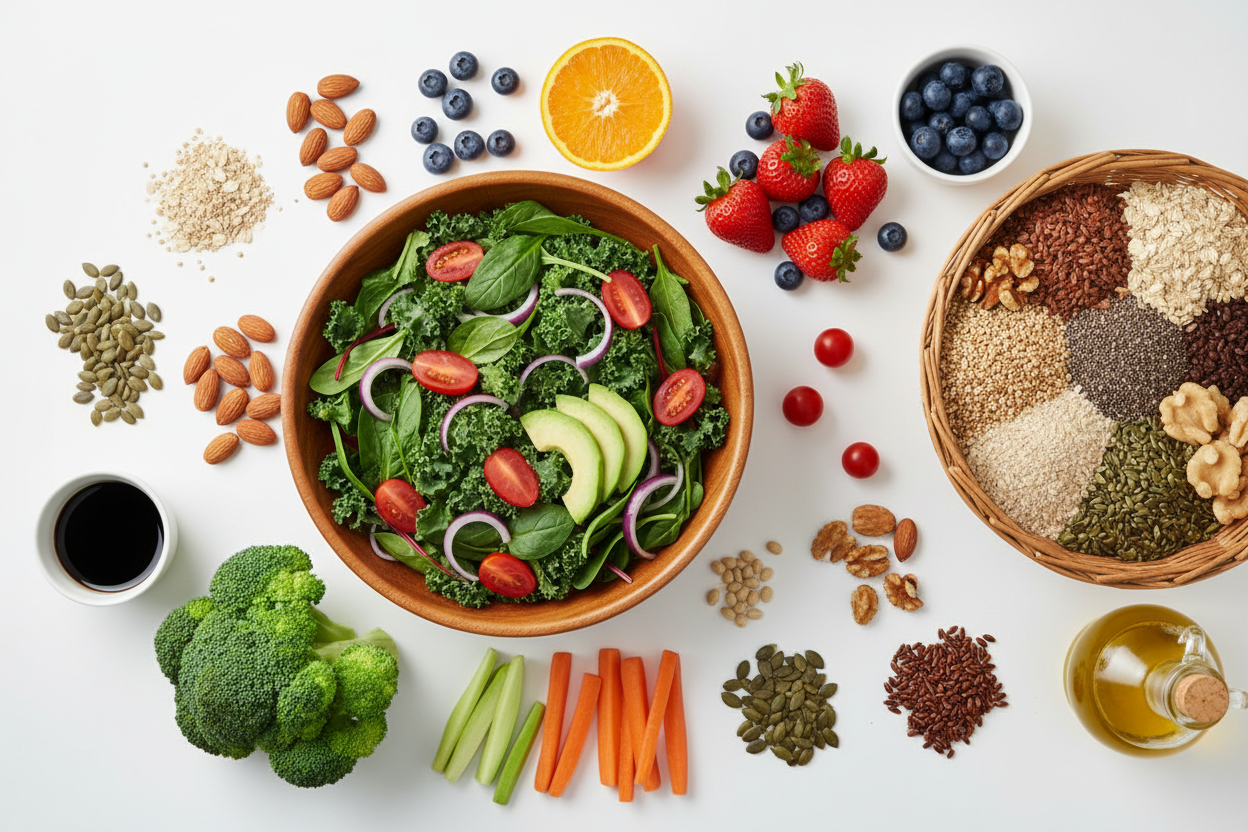
A colorful and diverse diet is one of the best ways to increase the variety of vitamins consumed daily.
Some examples of foods naturally rich in vitamins include:
Fruits
- Citrus fruits
- Kiwi
- Berries
- Mango
Vegetables
- Spinach
- Cabbages
- Broccoli
- Carrots
- Peppers
Proteins and animal-based foods
- Fish
- Eggs
- Lean meat
- Dairy products
Other sources
- Nuts
- Seeds
- Legumes
- Whole grains
When might it be necessary to take a vitamin supplement?
In some situations, it can be difficult to obtain certain nutrients solely through diet. Supplementation may be considered when there is a specific need identified by a healthcare professional.
Some groups may be at higher risk of insufficient intake of certain vitamins, such as people on restrictive diets, the elderly, pregnant women, or people with specific nutritional needs.
Before starting a dietary supplement, it is advisable to seek advice from a healthcare professional.
Is it possible to get all vitamins through diet?
In most cases, a varied and balanced diet provides most of the vitamins the body needs.
However, factors such as lifestyle, sun exposure, food choices, and individual needs can influence the adequate intake of certain nutrients.
Conclusion
Vitamins are fundamental micronutrients for the normal functioning of the body. A balanced diet, based on varied and nutrient-rich foods, is the best strategy to ensure adequate intake.
When necessary, dietary supplements can complement the diet but should not replace a healthy diet or a balanced lifestyle.
The information presented in this article is for informational purposes only and does not replace medical advice. Dietary supplements should not be used as a substitute for a varied and balanced diet and a healthy lifestyle.


Leave a comment
This site is protected by hCaptcha and the hCaptcha Privacy Policy and Terms of Service apply.